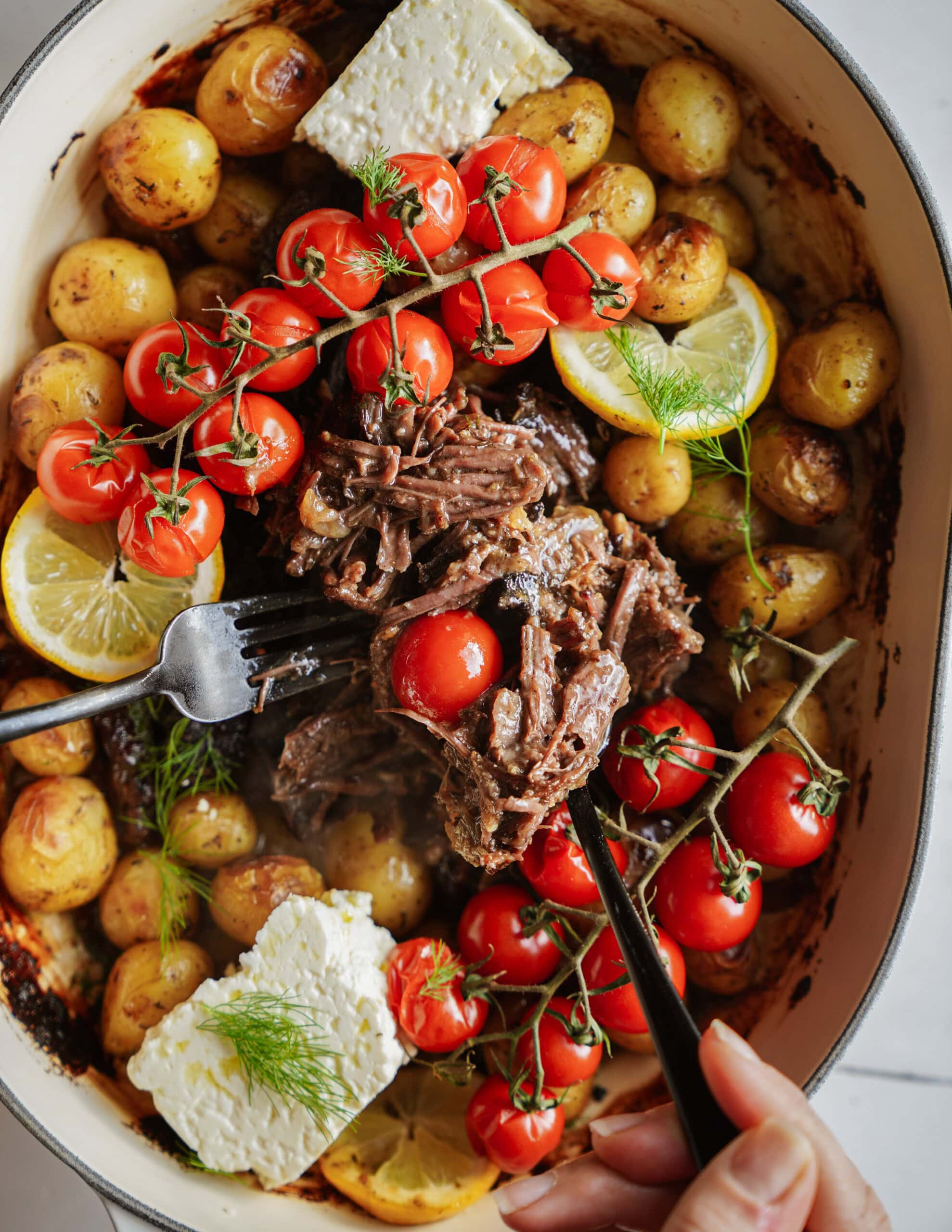
Authentic Greek Braised Chuck Roast: A Symphony of Tender, Rich, & Flavorful Comfort
Imagine a dish that effortlessly transports you to sun-drenched Mediterranean shores with every forkful. This isn't your average pot roast. We're talking about an authentic
Greek braised chuck roast – a culinary masterpiece that marries the rustic comfort of slow-cooked beef with the vibrant, aromatic flavors of Greek cuisine. It’s a meal that promises not just tenderness and richness, but a depth of flavor that lingers, making it a beloved choice for cozy family dinners and relaxed entertaining alike. Better yet, like many great braises, it often tastes even more spectacular the next day, making it an ideal make-ahead dish.
While a classic braised chuck roast often aims for comfort, it can sometimes fall short on complexity, resulting in a perfectly tender but somewhat forgettable meal. This Greek-inspired iteration, however, is anything but bland. By layering bright lemon, fragrant herbs, and savory pan juices into a slow braise, we create a dish that feels familiar yet excitingly new. The result is truly melt-in-your-mouth beef, infused with cozy flavors that are perfectly suited for cooler weather, and a dish that consistently delivers on its promise of delicious leftovers.
Why Chuck Roast is Your Go-To for Braising Perfection
Choosing the right cut of meat is fundamental to a successful braise, and
chuck roast stands out as one of the absolute best. Hailing from the shoulder of the cow, this cut is inherently built for low-and-slow cooking. Its structure is rich in connective tissue and boasts beautiful marbling throughout. These elements, which might make a chuck roast tough if cooked quickly, are precisely what make it ideal for braising.
As the roast slowly simmers in its flavorful liquid, the collagen (a key component of connective tissue) gradually breaks down and converts into gelatin. This transformation is magical: it tenderizes the meat from a firm, often inexpensive cut into incredibly rich, juicy, and fork-tender beef. Simultaneously, the marbling, or intramuscular fat, renders down, basting the meat from within and contributing to its succulent texture and deep flavor profile. This process allows you to create a gourmet-quality meal with little effort, making it a wonderfully
Budget-Friendly Greek Chuck Roast: Gourmet Flavor, Fork-Tender Beef.
One of the great beauties of cooking a chuck roast is its forgiving nature. Unlike leaner cuts that can quickly dry out or become tough if overcooked, a chuck roast only gets better with more time in the braising liquid. If your roast ever seems a little resistant to shredding or cutting, don't panic – it simply needs more time to work its magic in the oven or slow cooker. This resilience makes it a fantastic choice for home cooks, guaranteeing a tender outcome almost every time. When selecting your chuck roast, look for a piece with good marbling and a relatively even thickness to ensure consistent cooking.
The Heart of Greece: What Makes This Braise Uniquely Greek?
What truly elevates this particular braised chuck roast from a conventional pot roast to a sensational culinary experience is its distinctive Greek-style flavor base. This approach draws deep inspiration from revered traditional Greek braises such as *kokkinisto* and *kapama*, where meat is lovingly slow-cooked in a rich, aromatic sauce until it reaches peak tenderness.
The foundation of this unique flavor profile is a robust tomato sauce, artfully layered with fresh garlic, earthy oregano, and a touch of warm, subtle spice. While not always front and center, spices like a hint of cinnamon or nutmeg are often found in authentic Greek meat stews, adding an unexpected layer of warmth and complexity that distinguishes them from simpler tomato-based dishes. These spices don't dominate but rather complement the other ingredients, creating an intriguing aromatic backdrop.
Crucially, a splash of acidity, primarily from ripe tomatoes and fresh lemon, plays a vital role in balancing the richness of the beef. This acidity brightens the entire dish, preventing it from becoming heavy or one-dimensional. Where some herb-only pot roasts might taste a bit flat, the interplay of savory beef, aromatic herbs, and tangy acidity creates a livelier, more complex flavor profile that is utterly captivating. It's this harmonious blend that allows this dish to
Elevate Your Pot Roast: Greek Braised Chuck Roast with Bright Flavors, transforming a humble cut into an extraordinary meal.
Mastering the Art of Braising: Essential Techniques for Success
Achieving that perfect, fall-apart tender
greek braised chuck roast isn't just about the ingredients; it's also about mastering a few fundamental braising principles. These techniques are simple but make an enormous difference in the final flavor and texture of your dish.
Browning Builds Flavor
This is arguably the most significant flavor upgrade you can impart to any chuck roast. Before the braising liquid even enters the pot, searing the meat at high heat until it develops a beautiful golden-brown crust is paramount. This process, known as the Maillard reaction, creates hundreds of new flavor compounds, contributing rich, savory, and deeply caramelized notes to the beef. These intensely flavored crusts then slowly dissolve into the braising liquid as everything cooks, infusing the entire sauce with unparalleled depth and complexity. Skipping this crucial step is one of the main reasons many home braises can taste disappointingly flat.
**Practical Tip:** Ensure your chuck roast is thoroughly patted dry before searing. Moisture prevents browning. Use a heavy-bottomed pot or Dutch oven and get it very hot with a good glug of olive oil. Sear the meat in batches if necessary, to avoid overcrowding the pan, which would steam the meat instead of browning it.
Braising vs. Boiling: The Liquid Level Matters
A true braise is not about completely submerging the meat in liquid. Instead, the roast should be only partially submerged – typically about one-third to one-half – allowing some of the meat to remain above the liquid as it cooks. This critical distinction creates a dual cooking environment: the submerged portion cooks gently in the liquid, absorbing its flavors, while the exposed portion is cooked by the moist, steamy air trapped within the covered pot. This allows for a gentle roasting effect and prevents the meat from becoming waterlogged. The steam also helps break down connective tissues efficiently, leading to incredible tenderness.
**Practical Tip:** Once your aromatic vegetables and liquid are in, ensure the liquid comes about halfway up the sides of the chuck roast. If it's too high, you risk boiling the meat; too low, and it might dry out.
The Importance of Slow and Low
The "slow and low" mantra is at the heart of any successful braise. Gentle, sustained heat over a longer period is what allows the tough connective tissues in the chuck roast to slowly convert into gelatin. This process cannot be rushed. Cooking at too high a temperature will simply toughen the meat further. Whether in an oven or a slow cooker, maintaining a consistent, moderate temperature ensures the meat breaks down beautifully without drying out.
Resting for Juiciness
Once your
Greek braised chuck roast is fork-tender, resist the urge to immediately carve into it. Just like with roasted meats, allowing the chuck roast to rest for 10-15 minutes after removing it from the heat allows the juices to redistribute throughout the meat. This ensures every bite is as succulent and flavorful as possible.
Skimming for a Polished Sauce
After cooking and resting, you'll likely find a layer of rendered fat on top of your braising liquid. While some fat adds flavor, too much can make the sauce greasy. Carefully skim off the excess fat with a spoon or a fat separator for a cleaner, richer, and more palatable sauce.
Serving Suggestions & Beyond: Making Your Greek Braised Chuck Roast an Unforgettable Meal
Once your magnificent
Greek braised chuck roast is ready, the possibilities for serving are as rich as the dish itself. This tender, flavorful beef and its vibrant sauce are incredibly versatile.
* **Classic Pairings:** Serve it over creamy mashed potatoes, fluffy rice, or traditional Greek orzo (pastitsio) for a hearty, comforting meal. The sauce is a star, so ensure you have something to soak up every last drop – crusty bread is non-negotiable!
* **Vegetable Companions:** Complement the richness with simple, fresh side vegetables. Roasted asparagus, blanched green beans with a squeeze of lemon, or a crisp Greek salad with feta and olives all offer a wonderful contrast.
* **Beyond the First Day:** One of the most remarkable qualities of this dish is that it often tastes *even better* the next day. The flavors have more time to meld and deepen, creating a more cohesive and complex profile. This makes it a fantastic make-ahead option for busy weeknights or for entertaining.
* **Meal Prep & Freezing:** Your Greek braised chuck roast is excellent for meal prepping. Store individual portions in airtight containers in the refrigerator for up to 3-4 days. It also freezes beautifully for up to 3 months, making it a perfect freezer-friendly meal to have on hand. Thaw overnight in the refrigerator and gently reheat on the stovetop or in the oven until warmed through.
* **Dietary Adaptations:** For those seeking gluten-free options, ensure your braising liquid and serving accompaniments (like rice or potatoes) are naturally gluten-free.
In essence, this
Greek braised chuck roast is more than just a recipe; it's an invitation to experience comfort, tradition, and exquisite flavor, all in one glorious pot.
This authentic
Greek braised chuck roast stands as a testament to the power of slow cooking and the magic of Mediterranean flavors. It transforms an humble cut of meat into an extraordinary culinary experience – tender, rich, and bursting with a vibrant, complex taste that will leave a lasting impression. From its melt-in-your-mouth texture to its deeply aromatic sauce, this dish promises not just a meal, but a memorable journey for your taste buds. Embrace the art of braising, and bring the warmth and robust flavors of Greece to your dinner table tonight.